In short
When the opener hums, clicks or reverses for no clear reason, the cause is often the safety sensors, a worn gear or the remote. A technician in Tenafly diagnoses it first and only suggests a new opener if repair doesn't make sense.
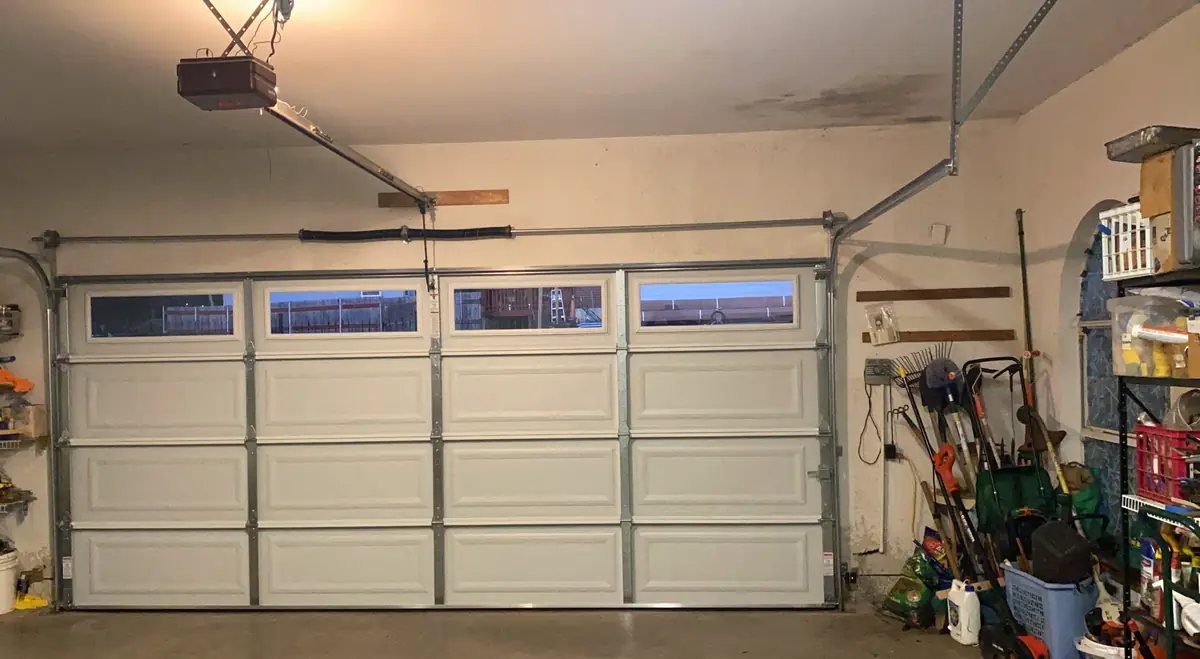
Openers in Tenafly homes
Garages tucked into the East Hill slope often sit below a family room or bedroom, so motor noise carries; the quieter belt or side-mounted units are popular here. Older detached garages in Highwood Park may need a circuit run out before any motor can go in.
When an ice storm takes down lines on the hill, a battery-equipped unit keeps the car from being trapped.
What the symptoms point to
If the door starts to close and reverses, the photo-eye sensors at the bottom of the tracks are the usual suspect. An opener that hums without moving often has a stripped gear, or it's fighting a broken spring. When only the remote or keypad fails, it's batteries or programming. A completely silent opener is a power or circuit-board problem. Loud grinding means worn drive parts.
An opener should only guide the door, not lift it. So the first test is always the door's balance; a worn spring makes any opener fail early.
Choosing a new opener
Older openers without working photo-eye sensors are worth replacing on safety grounds alone. For most homes the choice comes down to noise and space: a belt-drive opener runs quietly under bedrooms, while a wall-mount unit clears the ceiling and works well with tall doors and low headroom. Battery backup and phone control are worth adding in an area where winter storms knock the power out.
Around Tenafly
- Highwood Park: A historic district with period homes and detached garages.
- Magnolia Avenue area: Another historic district with older houses near the schools.
See the full Tenafly service area.
Questions we hear in Tenafly
Do you cover the west side too?
Yes, all of Tenafly.